
All about a “true bug,” the Brown Marmorated Stinkbug
Exploring the Western NY Wilds By Bob Confer
There are bugs and then there are bugs.
“Bugs” is a term thrown around by most everyone to describe insects in general, from flies to beetles and caterpillars to grubs.
That makes entomologists cringe. That’s because bugs are more specific.
In the insect world there is an order named hemiptera, which applies to the true bugs. What separates bugs from other insects is the presence of sucking mouthparts. There are more than 100,000 species globally, critters such as cicadas, leafhoppers, and assassin bugs.
Among the true bugs are autumnal and winter invaders of your home that this columnist has written about before – boxelder bugs and western conifer seed bugs.
Those harmless, yet unnerving insects, have recently been joined by another home invader which just happens to be an invader of our country – the brown marmorated stinkbug.

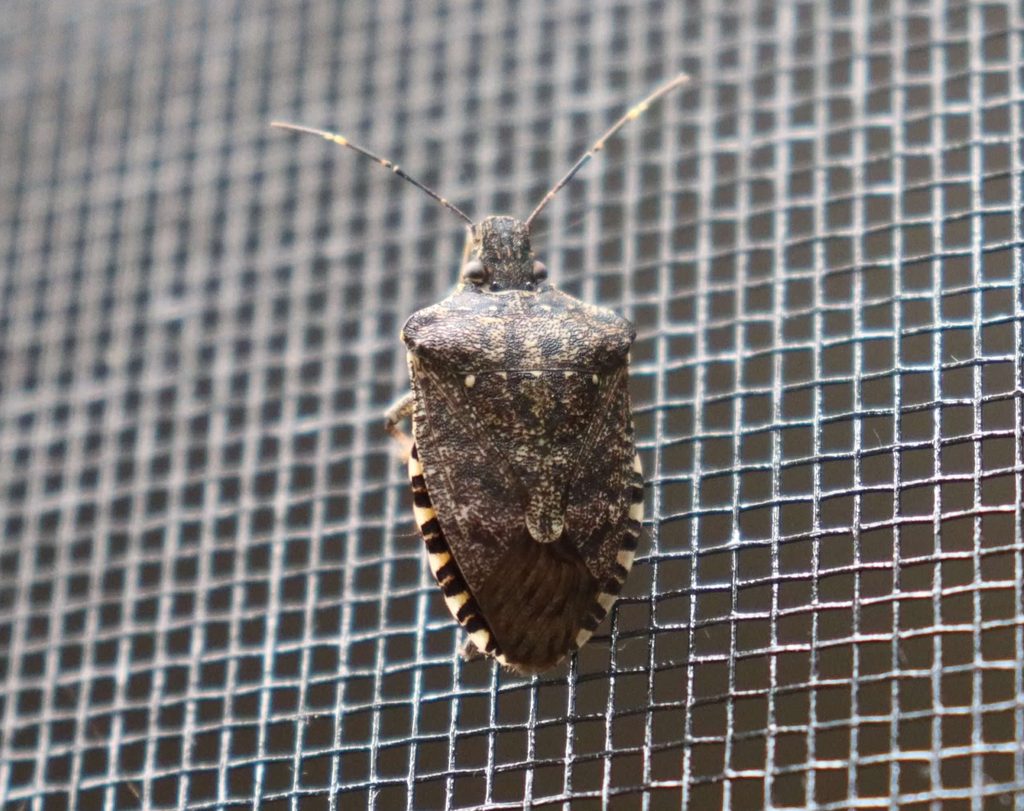
This stinkbug is shaped like other stink bugs that you are long familiar with except in fewer numbers. Rather than being solidly grey or green like them, these are like their name implies — brown and marmorated, which means marbled or streaked. At close inspection you will notice a mix of dark brown and light brown as well as a white-and-black pattern on the outside edges of its folded wings.
If you have been a homeowner for any length of time, you might say to yourself after encountering them in numbers trying to enter your home or garage, “I don’t remember stinkbugs being like this.”
You’re not in the wrong. They weren’t.
Brown marmorated stink bugs are a relatively new addition, having come here via unchecked freight from China. They were first confirmed on US soil in 2001, in Allentown, Pennsylvania. They were first found in the Empire State in 2007, initially in very low numbers. They made it to the Niagara Region of Ontario by 2012.
Somehow, in that 25 years since their initial discovery, they have propagated and populated and are now the most abundant stink bug in the northeast. They’ve found incredible opportunity to thrive because they will dine on more than 170 species of plants and they have a special affinity for fruit crops – blackberries, strawberries, and peaches.
They are especially destructive to apples and the apple industry. The bugs inject tissue-destroying enzymes through their piercing/sucking mouthparts, which leaves brown spots, dimples, and deeply-recessed areas beneath the skin of the apple that makes the fruit unavailable for retail sale. To combat them, some apple growers have increased their use of insecticides by two to four times.
How bad are these invasive stinkbugs? In 2010 alone – 9 years into the invasion and 16 years ago, before their population really exploded – ag economists found that apple growers in the mid-Atlantic States had a loss of $37 million for the year because of the bugs. With New York ranking second nationally in apple production, that puts our economy right in the crosshairs.
I guess that gives homeowners a different perspective. While you might get frustrated with them congregating on window sills, siding, and doorways in an attempt to get into your home to escape winter’s wrath, your frustration is nothing compared to that faced by farmers. Whereas their crops, their livelihood can be harmed, your home won’t be. These bugs don’t eat wood or furniture and they don’t carry diseases.

But that doesn’t mean they aren’t pests. If you are wondering how to keep them out of your house – because no one wants bugs crawling around their kitchen and no one wants the repulsive stink that comes with stepping on one — you have a few options. You can use insecticides or perimeter sprays. You could spread diatomaceous earth. You should look for and repair any holes in screens of your doors, windows, and attic.
It’s a tough battle – one that you had already undertaken with their native cousins – and it’s one that homeowners and farmers don’t need. Brown marmorated stinkbugs have invaded our country, homes, and farms. This is just the start.
As with so many other invasive species, it stinks.

Exploring the Western NY Wilds from Bob Confer brings our readers regular insight from a lifetime of exploring and learning about our regions natural world. Questions or comments are always welcomed, email Bob@Conferplastics.com

