

Educators and school systems ability to provide for disabled students faces systemic challenges
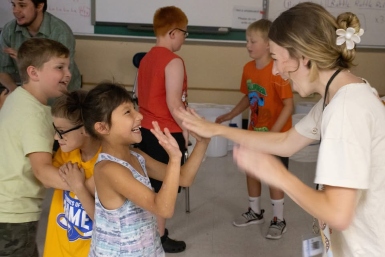
A COLUMN By Jaimie Hulin, photo from Erie1BOCES,
In a previous column, my husband Clayton and I shared some of the challenges rural families face when trying to access services for children with significant physical and developmental disabilities. Those struggles are very real, but they tell only part of the story. Behind every service, every classroom, and every hard-earned milestone are dedicated professionals who continue to serve our children despite obstacles many people never see.
As both a teacher and the parent of a child with significant developmental disabilities, I have had the privilege of working alongside exceptional educators, therapists, aides, secretaries, bus drivers, and support staff.
I know teachers who quietly keep snacks, hygiene supplies, and extra clothing in their classrooms because they know a student may need them.
I know educators who never forget a birthday, celebrate a successful basketball game or school performance, and recognize accomplishments that many people might overlook. Sometimes the biggest victory isn’t a perfect test score…it’s a student mastering a new skill after weeks or months of patient encouragement.
I know professionals who arrive early, stay late, coach, advise, comfort, and encourage. Even after the school day ends, they continue thinking about “their kids,” wondering how they can help them succeed tomorrow.

The same is true in specialized programs operated outside a student’s home district. The teachers, therapists, aides, secretaries, transportation staff, and countless others working in these programs care deeply about our children. They celebrate progress that often comes one small step at a time and understand that every milestone…no matter how small it may seem to others…represents tremendous effort and perseverance.
Many of these professionals work for BOCES, an organization many people have heard of but don’t fully understand. BOCES, or the Board of Cooperative Educational Services, was created in New York State to allow neighboring school districts to work together and share programs that would be difficult or too expensive for individual districts to provide on their own. In addition to Career and Technical Education (CTE), BOCES offers professional development for educators, instructional support services, technology assistance, and a wide range of special education programs for students whose needs cannot always be met within their home districts.
Without BOCES, many rural communities simply would not have access to the specialized teachers, therapists, equipment, and programs their students need.
Their dedication, however, often hides the challenges they face behind the scenes.
Because BOCES does not own most of the buildings where special education classrooms are located, many of its programs are housed within local school districts. This partnership allows students to receive services closer to home, which benefits families and communities alike. However, because these classrooms are located in host districts, there are times when enrollment, construction projects, or other local needs require that space be used differently. When that happens, entire classrooms may need to relocate to another building or district.
This is not meant as criticism of any district. Schools have changing enrollment, programming needs, and space limitations. Sometimes difficult decisions simply have to be made.
But relocating a specialized classroom is no small task. Classrooms must be packed, specialized equipment moved, sensory spaces recreated, adaptive technology reinstalled, and carefully established routines rebuilt. Staff members often face longer commutes, learn new building procedures, and build relationships within a different school community…all while helping students, many of whom rely on consistency and predictability, successfully adjust to a new environment.
And they do it because they are committed to the children they serve.

Funding presents another challenge.
Unlike individual school districts, which primarily rely on local property taxes, BOCES is funded through a combination of district participation, state aid, and other revenue sources tied to the many services it provides. Those resources must support career and technical education, special education, instructional services, professional development, technology support, and numerous other regional programs. As needs continue to grow across all of these areas, available funding does not always keep pace.
The result can be shortages of teachers, aides, therapists, classroom resources, and specialized programming. Existing staff are often asked to do more with the same…or sometimes fewer…resources, all while maintaining the high-quality services students deserve.
Despite these realities, these professionals continue showing up every day with compassion, patience, and professionalism. They celebrate successes, comfort frustrations, solve problems, and help students accomplish goals that once seemed impossible.
The strain created by these systemic challenges affects everyone involved. It affects educators trying to provide the best possible instruction. It affects families searching for services. Most importantly, it affects the students whose progress depends on consistent, high-quality support.
Awareness alone will not solve these challenges, but it is an important first step. The professionals serving our most vulnerable students deserve recognition not only for their dedication, but also for the realities they navigate every day.
When next we talk, I’ll explore what meaningful change could look like…and how communities, policymakers, and citizens can help strengthen the system that serves some of our most vulnerable children.
Jamie Hulin is a Franklinville mother who understands the big picture and fine print when it comes to educating disabled children. She and her family have years of first hand experience and navigating the system in our state and region. You can reach her anytime, jlhulin@yahoo.com
Read Jamie and her husband Clay’s first article on this subject below: