

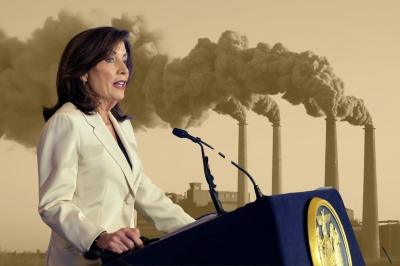
Governor Kathy Hochul was successful in her bid to upend the Climate Leadership and Community Protection Act after legislators caved to finalize an overall budget deal
From NYFocus.com By Amudalat Ajasa and Nick Garber · May 27, 2026
One of the highest-stakes questions in Albany this year has been whether Governor Kathy Hochul could convince a skeptical legislature to roll back the centerpiece of New York climate policy.
The final state budget, set to be passed this week after an almost two-month delay, makes clear that she succeeded. Lawmakers are punting the Climate Leadership and Community Protection Act’s first deadline for emissions regulation — which is already two years late — and creating a new interim target date by which to cut emissions. They accepted a major change to how emissions are measured that they had rejected three years ago. And they loosened the requirements binding the state to the deadlines.

Hochul said the changes were needed to protect New Yorkers’ wallets. Legislators at first appeared staunchly opposed, but eventually caved. There would have been no way to get to a budget deal if they hadn’t, Assemblymember Anna Kelles said.
“We are watching New York become the first state in the country to roll back its climate laws. It’s disappointing and embarrassing,” Kelles said.
The 2019 climate law, one of the most ambitious in the country, required the state to create regulations to reduce emission by the start of 2024. It set deadlines to cut emissions by 40 percent from 1990 levels by 2030 and achieve near net zero by 2050.
Hochul’s administration failed to meet the 2024 requirement. Environmental groups sued, and a judge forced Hochul’s hand: Change the law or issue the regulations.
Now, the Hochul administration will have until the end of 2028 to issue regulations to reduce emissions. The deal scraps the 2030 requirement and instead sets an interim target of 2040 to reduce emissions 60 percent from 1990 levels — “to the maximum extent feasible and cost effective.” The 2050 mandate remains in place.
It also alters a key component of the law: changing the state’s emissions counting method from a 20-year one to a 100-year one, a hotly debated move that will make the state seem closer to its climate goals without doing anything else differently.
The changes largely echo the details Hochul shared when she announced that a final deal had been reached on the budget early May, a claim assemblymembers quickly disputed.
READ THE FULL ARTICLE ON NYFOCUS.COM