Ceratocystis fagacearum is the latest threat to the forests and the food chain
Exploring the Western NY Wilds By Bob Confer, image from NYSDEC
It seems like Western New York forests are under constant attack, in wars that they can’t win.
In the early 1900s, chestnut trees were exterminated from our woodlands by chestnut blight. Dutch elm disease wiped out impressive stands of elms from the 1950s through the 1980s. Ash trees have been all but eliminated by the emerald ash borer over the past 15 years, about the same time beech trees began their decline due to beech bark disease. The hemlock woolly adelgid keeps making itself known in the region.
As our forests reel from those diseases and pests, and are forever changed, more pestilence is piled upon them. Another threat being posed to WNY forests is oak wilt.
Until only recently, oak wilt was almost unheard of in New York. There was a small outbreak in Glenville in Schenectady County in 2008 that was contained and then found to have recurred in 2013, which was also contained. Then, in 2016, some was found in Islip on Long Island.
Then along came some local findings.
In 2016, a homeowner in Canandaigua noticed that an oak tree on their property began dying with no identifiable cause. Samples from the tree were sent to the Cornell Plant Disease Diagnostic Clinic, where they tested positive for the fungus that causes the disease.

Just 3 years ago, oak wilt was found across the border in the province of Ontario. So far, no exposure has been found in Niagara County.
Then, 3 months ago, the New York State Department of Environmental Conservation (DEC) announced the expansion of quarantine districts in Yates and Ontario counties.
There is no known treatment to contain and kill the oak wilt fungus other than to remove infected trees, as well as any surrounding host oak trees. The DEC takes down the trees in question, does remediation work around the sites, and initiates an emergency order establishing a protective zone or quarantine prohibiting the movement of oak material out of the immediate area to prevent the fungus from spreading. The DEC also conducts aerial and ground surveys to identify additional trees that may be infected.
It seems like a lot of concern and work, but it’s absolutely necessary to save the forests from the spread of oak wilt. It is a serious tree disease that kills thousands of oaks each year in the midwest. It is caused by a fungus — Ceratocystis fagacearum — which grows in the water-conducting vessels of host trees, causing the vessels to produce gummy plugs that prevent water transport. As water movement within the tree is slowed, the tree starves to death. The leaves wilt and drop off, and eventually the tree dies.
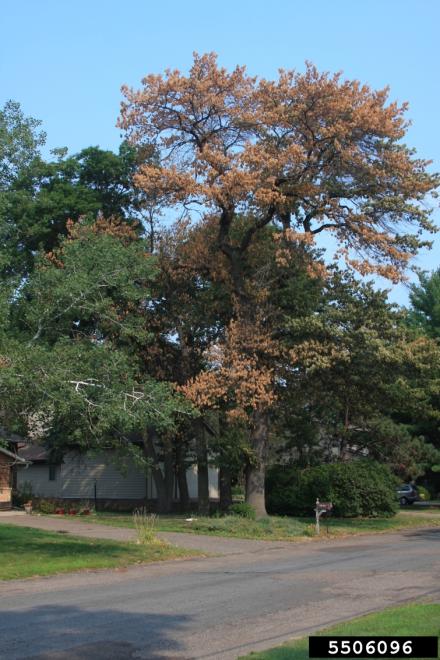
All oaks are susceptible to oak wilt, but red oaks die much faster than white oaks. Red oaks can take anywhere from a few weeks to six months to die and they spread the disease quickly. White oaks can take years to die. Photo by Steven Katovich, USFS, Bugwood.org
Here are some symptoms of the disease:
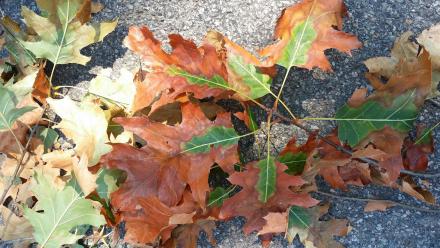
- Brown coloration can develop on leaves starting at the outer edge and progressing inward toward the mid-vein of the leaf.
- Branch dieback may be visible starting at the top of the canopy and progressing downward.
- Leaves suddenly wilt.
- Leaf loss during spring and summer. Leaves may fall when green or brown.
- Fungal spore mats may develop under the bark, forming pressure pads that can raise and split the bark.
The DEC asks that the public report any occurrences where an oak tree dies over a short period of time or exhibits some of the symptoms. Use the toll-free Forest Health Information Line toll-free at 1.866.640-0652 or email foresthealth@dec.ny.gov. Visit NYS DEC Oak Wilt homepage
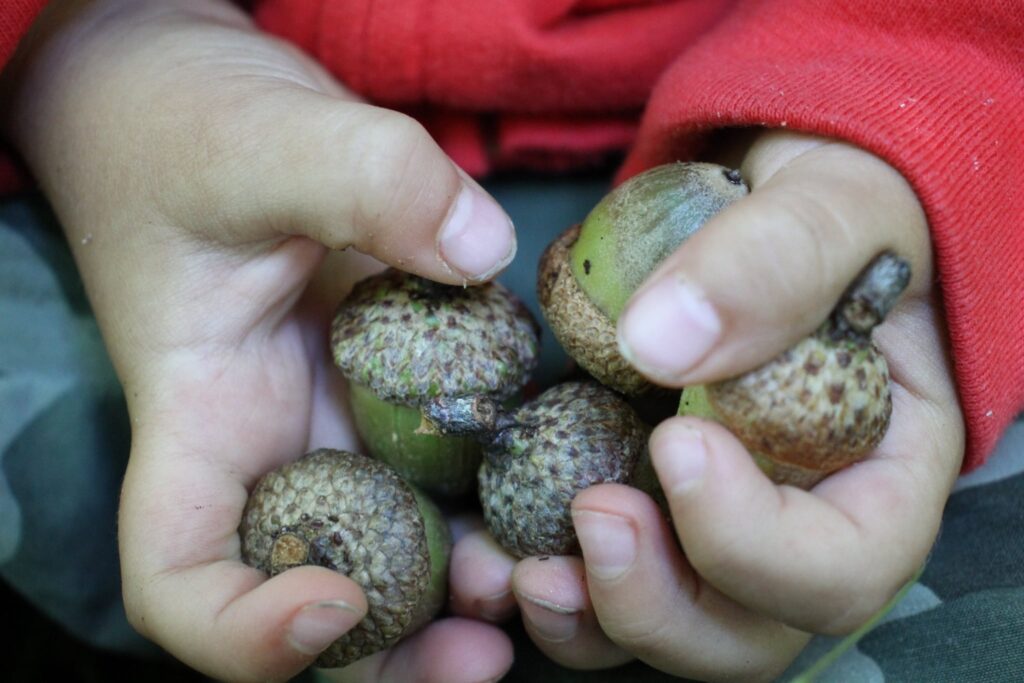
It is important that woodlot owners and hikers regularly inspect trees for the disease. If oak trees are eliminated from our forests, especially in the southern tier, it will remove a vital food (acorns) that provides sustenance for a variety of animals from deer to bear to turkeys to squirrels. Considering the recent loss of beech nuts and ash seeds from local forests, the nutrition provided by acorns is a matter of life and death for some species.
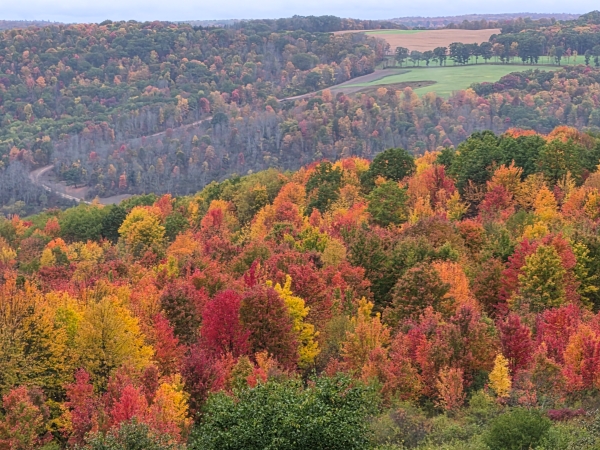
On top of that, the loss of oaks will eliminate some of the most brilliant trees from our fall landscapes.
A Western New York without oak trees is a frightening thought, so be diligent while exploring the wilds.
Bob Confer is a forest bather, a naturalist, and avid outdoorsman for his entire half century on the planet. He writes Exploring the Western NY Wilds from experience and curiosity, you can contact him anytime at Bob@Conferplastics.com