

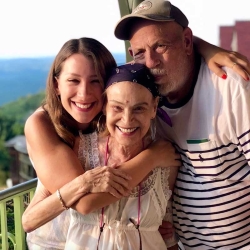
What Governor Hochul wants to change
An Essay By Tiger Hulin, picture from Deathwithdignityny.org
One of the hardest things I have ever done as a nurse is attend the death of another human being. No matter how many years pass, it never becomes routine. I have held hands, whispered comfort, steadied the last breath, and in one of the heaviest moments of my career, I even had to call the director of our nursing home, a friend at the time, and tell her that her own mother had passed away. There is no manual for moments like that. They cut straight through the armor we pretend to wear.
Life may be fragile, but it is never small. And when a patient dies, a nurse does not simply move on. We lose a piece of ourselves every single time. We are taught to preserve life, to defend it, to honor its worth even in its most difficult hours. That does not mean we diminish anyone’s pain, or question someone’s strength, or judge how much suffering a person can endure. It means we recognize that life is sacred, even when it is bruised, even when it is failing, even when it is slipping through our fingers despite everything we do.
So when I look at the Medical Aid in Dying Act, and the amendments Governor Hochul wants to attach to it, I feel the full weight of both sides. Compassion asks us to listen to those who suffer. Wisdom asks us to tread carefully when the choice is irreversible. Fair and balanced is what this conversation deserves, and what follows is an honest attempt to give it exactly that.

The Question Medical History Will Not Let Us Ignore
There is a question that keeps circling in my mind as this debate unfolds, and it is not political. It is historical, and medical, and painfully human.
Has there ever been a time when people died, even voluntarily, even with everyone believing their condition was hopeless, only for a cure or life-saving treatment to appear within months?
As a medical historian, I can tell you the answer without hesitation.
Oh yeah. Absolutely. Many times.
Medicine moves fast, faster than laws, faster than ethics, and faster than our ability to understand what is coming next.
- Leukemia went from a death sentence to treatable within a handful of seasons.
- Early HIV took thousands before the right drug combination arrived in 1996, and that breakthrough came less than six months after many had already given up hope.
- Spinal Muscular Atrophy took infants by the dozens until Spinraza appeared almost overnight in medical terms.
- Testicular cancer went from fatal to curable in the span between two editions of the same oncology textbook.
History has a pattern. At the very moment society declares a disease hopeless, hope tends to walk in quietly behind it.
That does not diminish anyone’s suffering. It does not erase the exhaustion I have seen in patients who have fought until they had nothing left. And it does not change the truth that a person’s life belongs to them.
But it does mean that irreversible decisions deserve extraordinary caution.
Why Governor Hochul Wants Additional Safeguards
I have seen the tiredness that comes from fighting for one’s life. Anyone who has worked at a bedside knows that look, the deep, bone level exhaustion that settles in when the human body has carried more than it was ever built to bear. And yes, a person’s life belongs to them. Their agency is not a gift from the state or from medicine. It is theirs by birthright.
Governor Hochul acknowledges that truth, but she is also looking at something else, the irreversible nature of the choice. That is why she is asking for safeguards that go beyond the version of the Medical Aid in Dying Act already passed by the Legislature. In her view, the gravity of this decision requires guardrails that protect autonomy rather than rush it.
Here is what she is requesting:
• A video recording of the patient requesting medical aid in dying
Intended to prove the request is voluntary, without pressure or manipulation.
• A mandatory psychiatric evaluation for every patient
An attempt to ensure decision making is clear and not clouded by treatable depression or overwhelming emotional fatigue.
• A seven day waiting period
A pause for thought, not a barrier, meant to ensure stability of intent.
• A requirement that only New York residents qualify
Designed to prevent assisted death tourism.
• A one year delay before the law takes effect
Time for training, oversight, and ethical preparation.
To the governor, these steps are not obstacles. They are a seatbelt.
A Legislature Pulled in Opposite Directions
The Legislature is caught between two competing truths, and both deserve respect.
On one side, supporters argue that suffering does not wait for bureaucracy. These patients are dying now. Their pain is now. Every added step could push relief out of reach. Many believe Hochul’s amendments create unnecessary hurdles for people who are already walking through fire.
On the other side, some lawmakers quietly agree with Hochul. When the state permits a life to end intentionally, the margin for error must be zero. Consent must be undeniable. The record must withstand time and hindsight.
Both positions come from human concern. They simply aim in different directions.
Walking the Line Between Autonomy and Protection
This is the center of the conflict. How do we honor both autonomy and protection when suffering is real and time is short?
I have sat with the dying. I have watched families cling to hope, and I have watched others reach the end of their strength long before their bodies followed. I have seen patients fight because they still had something to fight for, and I have seen others reach the point where they had nothing left to carry.
So I cannot dismiss the desire for control at the end of life.
But I also cannot dismiss the undeniable fact that medicine sometimes produces miracles no one expected.
This debate deserves patience and courage, not slogans, not political pressure, not haste.
We owe the dying our compassion.
We owe the vulnerable our vigilance.
We owe autonomy our respect.
And we owe truth our loyalty.
Aside: Diseases Once Considered Hopeless
Medicine has a short memory, but history does not. Before we decide what hopeless means in 2025, it is worth remembering how many conditions were once considered beyond saving until they were not.
A few examples:
• Rabies. Pasteur’s vaccine arrived months after families had already given up hope.
• Spinal Muscular Atrophy. Spinraza and Zolgensma transformed survival almost instantly.
• Leukemia. Childhood leukemia went from fatal to treatable within a single decade.
• HIV and AIDS. The 1996 drug combination reversed the epidemic almost overnight.
• Testicular Cancer. Cisplatin chemotherapy changed survival in one year.
• Tuberculosis. Streptomycin turned sanatoriums from waiting rooms into relics.
• Peptic Ulcer Disease. H. pylori transformed it into an antibiotic cure.
• Syphilis. Penicillin erased a disease that once filled asylums.
• Hepatitis C. Direct acting antivirals now cure ninety percent or more.
• Cystic Fibrosis. CFTR modulators dramatically extended life and hope.
These breakthroughs do not diminish anyone’s suffering.
They remind us that the word terminal sometimes reflects the limits of today rather than the limits of tomorrow.

Final Reflection
I know this subject is hard. It reaches into the deepest corners of our values, our fears, our compassion, and our lived experiences. I am not looking for a side to join. I choose humanity every time, and I know many of you do too. Whether you lean toward autonomy or caution, toward relief from suffering or the preservation of life, the fact that you care at all means your heart is in the right place.
This debate is not about politics. It is about people. People we have loved, people we have cared for, people whose hands we have held, people whose stories ended too soon.
If we can carry that truth with us as New York navigates this moment, we may find our way to a law, or at least a conversation, that honors the human lives at its center.
HIV / HAART (1996 turning point)
HIV.gov. (2024). A timeline of HIV and AIDS. U.S. Department of Health & Human Services.
https://www.hiv.gov/hiv-basics/overview/history/hiv-and-aids-timeline hiv.gov
American Chemical Society. (2023). Discovery of highly active antiretroviral therapy for HIV. National Historic Chemical Landmarks.
https://www.acs.org/education/whatischemistry/landmarks/highly-active-antiretroviral-therapy-hiv.html American Chemical Society
SMA: Spinraza and Zolgensma
Cure SMA. (2016, December 23). FDA approves Spinraza for SMA.
https://www.curesma.org/fda-approves-spinraza-for-sma/ Cure SMA
U.S. Food and Drug Administration. (2019, May 24). Statement on data accuracy issues with recently approved gene therapy [Press release discussing Zolgensma approval context].
https://www.fda.gov/news-events/press-announcements/statement-data-accuracy-issues-recently-approved-gene-therapy U.S. Food and Drug Administration
Novartis. (2019, May 24). AveXis receives FDA approval for Zolgensma, the first and only gene therapy for pediatric patients with spinal muscular atrophy (SMA) [Press release].
https://www.novartis.com/news/media-releases/avexis-receives-fda-approval-zolgensma-first-and-only-gene-therapy-pediatric-patients-spinal-muscular-atrophy-sma Novartis
Rabies vaccine (Pasteur 1885)
Mayo Clinic. (2024). Rabies: History of disease outbreaks and vaccine timeline.
https://www.mayoclinic.org/diseases-conditions/history-disease-outbreaks-vaccine-timeline/rabies Mayo Clinic
Institut Pasteur. (2023, November 15). The history of the first rabies vaccination in 1885.
https://www.pasteur.fr/en/research-journal/news/history-first-rabies-vaccination-1885 Institut Pasteur
Tuberculosis and streptomycin
Waksman Museum of Microbiology, Rutgers University. (n.d.). Streptomycin and the legacy of Dr. Selman Waksman.
https://sebs.rutgers.edu/waksman-museum/streptomycin Rutgers SEBS
Woodruff, H. B. (2014). Selman A. Waksman, winner of the 1952 Nobel Prize for physiology or medicine. Proceedings of the National Academy of Sciences, 111(20), 7170–7173.
https://www.ncbi.nlm.nih.gov/pmc/articles/PMC3911012/ PMC
Peptic ulcer disease and H. pylori
Marshall, B. J., & Warren, J. R. (1984). Unidentified curved bacilli in the stomach of patients with gastritis and peptic ulceration. The Lancet, 323(8390), 1311–1315.
https://pubmed.ncbi.nlm.nih.gov/6145023/ PubMed
Syphilis and penicillin
Mahoney, J. F., Arnold, R. C., & Harris, A. (1943). Penicillin treatment of early syphilis, a preliminary report. American Journal of Public Health, 33(12), 1387–1391.
https://ajph.aphapublications.org/doi/10.2105/AJPH.33.12.1387 American Journal of Public Health
(Free full text also via PubMed: https://pubmed.ncbi.nlm.nih.gov/18015910/ PubMed)
Hepatitis C and direct-acting antivirals
Afdhal, N., Zeuzem, S., Kwo, P., Chojkier, M., Gitlin, N., Puoti, M., et al. (2014). Ledipasvir and sofosbuvir for untreated HCV genotype 1 infection. New England Journal of Medicine, 370, 1889–1898.
https://www.nejm.org/doi/full/10.1056/NEJMoa1402454 New England Journal of Medicine
Baumert, T. F., Berg, T., Lim, J. K., & Nelson, D. R. (2019). Status of direct-acting antiviral therapy for hepatitis C virus infection and remaining challenges. Gastroenterology, 156(2), 418–429.
https://www.gastrojournal.org/article/S0016-5085(18)35155-2/fulltext Gastro Journal
Childhood leukemia “total therapy”
Simone, J. V. (2006). History of the treatment of childhood acute lymphoblastic leukemia, a paradigm for cancer cure. Pediatric Blood and Cancer, 46(5), 460–465.
https://www.sciencedirect.com/science/article/abs/pii/S1521692605001040 ScienceDirect
St. Jude Children’s Research Hospital. (2022, March 14). Donald P. Pinkel, MD, revolutionized treatment for childhood leukemia.
https://www.stjude.org/research/progress/2022/donald-pinkel.html St. Jude
Cystic fibrosis and CFTR modulators (Kalydeco)
Cystic Fibrosis Foundation. (2012, January 31). Cystic Fibrosis Foundation applauds FDA approval of Kalydeco, first drug to treat underlying cause of CF [Press release].
https://www.cff.org/press-releases/2012-01/cystic-fibrosis-foundation-applauds-fda-approval-kalydecotm-first-drug Cystic Fibrosis Foundation
PR Newswire. (2012, January 31). FDA approves Kalydeco to treat rare form of cystic fibrosis [Press release].
https://www.prnewswire.com/news-releases/fda-approves-kalydeco-to-treat-rare-form-of-cystic-fibrosis-138405949.html PR Newswire