
From Exploring the Western NY Wilds
By Bob Confer, follow Exploring on Facebook
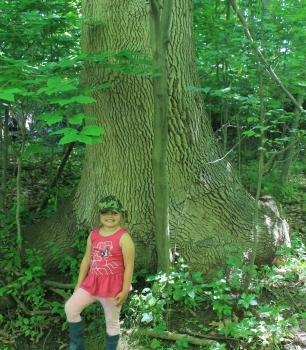
The older readers of this column may remember the once abundant American chestnut.
This magnificent tree dominated the Eastern landscape with quick-growing specimens that routinely reached heights of 100 feet. By the late-1950s, chestnuts were a thing of the past. More than 3 billion of the trees (25 percent of the entire Appalachian forest) succumbed to a blight brought to North America from Asia.
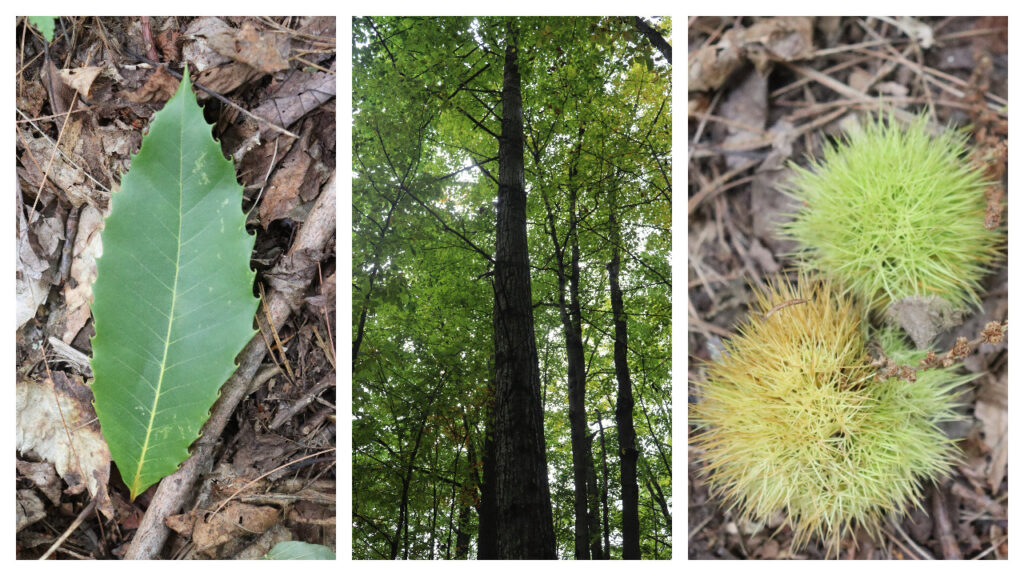
Now, true American chestnuts are extremely rare — only a select few with hardy genes can be found in areas off the beaten path. Those beleaguered trees almost never reach 50 feet in height and are always short-lived.

Similarly, baby boomers and some of their very oldest offspring will remember how the impressive American elm used to dot the countryside and line city streets. It was a long-lived tree with a thick trunk and wide canopy.
Following the demise of the chestnut it, too, faced an invasive attack.
Dutch elm disease — a fungal infection spread by an Asian beetle — ravaged the elms over the second half of the twentieth century. It came close to but didn’t fully wipe out the elms, but it left behind a significantly-smaller population that can reach only a fraction of the age and size that they once did. For all intents and purposes, the elm is basically dead as we knew it.
A lot of folks look back with fondness on chestnuts and elms. Whether someone farmed or hunted alongside these once-great trees or as a child spent many a summer hour climbing or swinging from one of them, they gave us many great memories and also some great economic benefit: The chestnut was one of the best hardwoods for furniture and home construction and the wood of the elm had fantastic strength.
The devastation of our forests at the hands of foreign invaders is never-ending. It seems that once one species of tree sees its demise another begins to face its greatest threat. Now is no different. Two types of trees which were until recently incredibly abundant in these parts will be gone very soon – ashes and beeches.
Not long ago, the ash was unmolested in our area. But, a lot can happen over a decade and a half. In 2009, the emerald ash borer was discovered in the southwest corner of the state after it had quickly made a destructive path from the upper-Midwest where it had already destroyed 40 million trees in short order (the Asian pest first appeared in the US in 2002).

These beetles bore through the inner bark of ashes, essentially girdling and ultimately killing the trees. 8 billion ash trees have been at risk of extermination and we’re seeing it locally: Over the past half dozen years you’ve seen all of the skeletonized, leafless trees come crashing down. It’s a frightening swath of arboreal death. It’s been heartbreaking, for sure. We had two giant ash trees on our farm in Gasport that likely came to be in the late-1800s and survived ice storms, wind events, droughts, and even a direct hit by lightning. But, they couldn’t survive the little beetle and its larvae.
Not only will this have a detrimental impact on our environment, but it will also harm our economy: $25 billion of ash had been harvested annually in the United States before the beetles staked their claims. There is no way to control the borer. Its movement can only be slowed down by firewood and timber quarantines, which, sadly, did not work at all in WNY. It’s pretty much guaranteed that the beetles will demolish the eastern forests.
Another pestilence that’s well under way is that faced by our beeches. Everyone is familiar with these trees, they of the smooth grey/silver bark that is a perfect target for carvings of initials and love. They have fallen victim to beech bark disease, a two-stage ailment where a small insect known as a scale infiltrates the bark and is then followed by a deadly fungus. The bark cracks and falls off and then the malnourished tree topples over.
This disease has really put a stranglehold on the area since the turn of this century. Take a look at any forest or town park in the region. Most every adult beech tree has passed or is showing symptoms of infection. It’s hard to believe that just a few years ago they were healthy and vibrant. This will adversely impact the mammals and birds that feasted on the beech nuts. Mother nature can’t replace that mast crop.
Unfortunately, there’s nothing we can do to save the ashes and beeches. They will go the way of the chestnuts and elms.
In the meantime, get out in the woods and appreciate their beauty while you can. Take some pictures or harvest the timber before it’s too late to do either. The trees are dying and they will become memories of the past, further changing the look, economic viability, and natural balance of the Western New York wilds.
Bob Confer is the founder of the Exploring the Western New York Wilds series focused on all that is wild and wonderful from Niagara Falls to Stoney Lonesome. You can reach him anytime, Bob@ConferPlastics.com